Many headlines regarding the sci-fi franchise return Tron: Ares have deemed it “illogical.” Going as far as calling the film’s star, Jared Leto, box office poison. This is not the whole truth here, and is a failed representation of this film. There is some truth to calling many of his previous outings “bombs,” to name a few: Blade Runner 2049, House of Gucci, and, of course, Morbius. Each film obviously had more factors than Leto’s involvement to make them not financially successful.
It seems there is a disconnect between the kinds of blockbusters audiences and critics alike beg for versus what they are willing to pay to see. Box office numbers for the opening weekend of Ares are roughly ten million below predicted, domestically. In many ways, the coverage of a film before its release can make or break its perception and potential success.
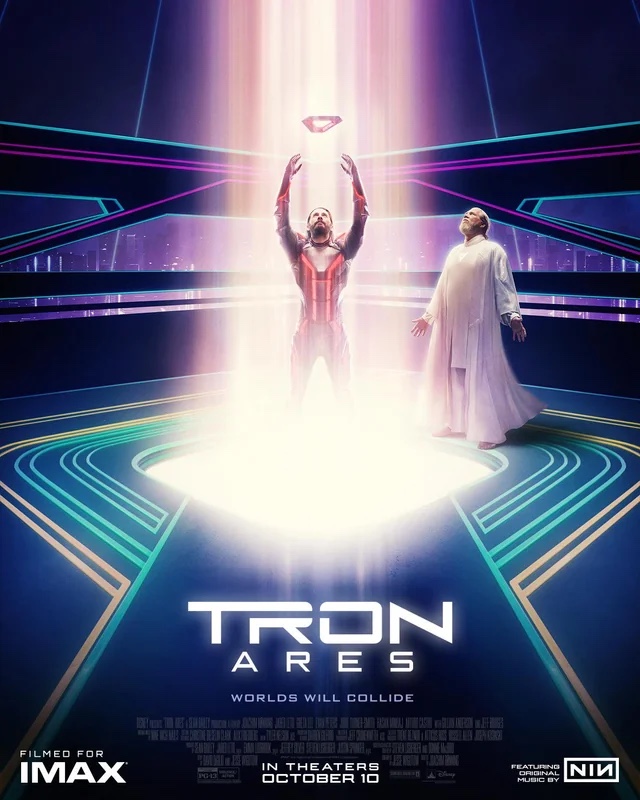
Morbius cemented itself in internet pop culture with its infamous, “It’s Morbin time,” meme. A line that was not actually uttered in the film, but used by millions to sum up how bad and overly serious many aspects of that film were. Beyond this one line, many aspects of the film became a meme. To be honest, going into Ares, I wanted Leto to look directly at the camera, unprompted, and say, “It’s Tronning time.” After experiencing the film in IMAX, I’m glad he didn’t.
To say Ares surpassed my low expectations (if I had any to begin with) might be the understatement of the year. Well, that and of course, yo mama is so fat they reclassified her as a new planet in the Milky Way Galaxy, which everyone already knows. An issue represented by Leto’s acting style in the past with major audiences is his inability to properly act like a regular human being. That “flaw” is exactly what helps him excel as the main lead, programming questioning his directives, Ares.
Previous entries Tron (1982) and Tron: Legacy (2010) brought viewers into the digital reality of ‘The Grid.’ I can’t speak for the original, but Legacy toys with he idea of “programs”, the names of the persons living in this computer world, coming to our world. Ares switches things up by fully committing to this idea, and it works very well. Ares himself begins to oppose his master, the CEO of the power-hungry corporation Dillinger Systems, to discover the difference between existing and being alive.
Ares slowly forms ideas and begins discovering his own identity, which helps immerse you in the movie. He is the leader of his group in The Grid, and when Dillinger tests bringing them into the real world, he has the most experience in both worlds. His goal is to find the key to unlock how to allow programs to exist permanently in our world. To do this, he must enter the original 1982 film’s version of The Grid. While there, he must speak with the digital “ghost” of Kevin Flynn, played again by Jeff Bridges, who is the creator of The Grid.
Modern sequels based on existing properties thrive on nostalgia to distract from lazy stories and weak writing. The part in the original Grid could have easily fit into this category, but it doesn’t. Though it has a big element from something old, it felt earned and natural in this story. In his conversation with Flynn, they compare Mozart to Depeche Mode. It was a standout scene in the film. Ares can’t explain why he prefers Depeche Mode; it’s just a “feeling”, as he puts it. This moment doesn’t take away from this new story’s personality, but elevates it.
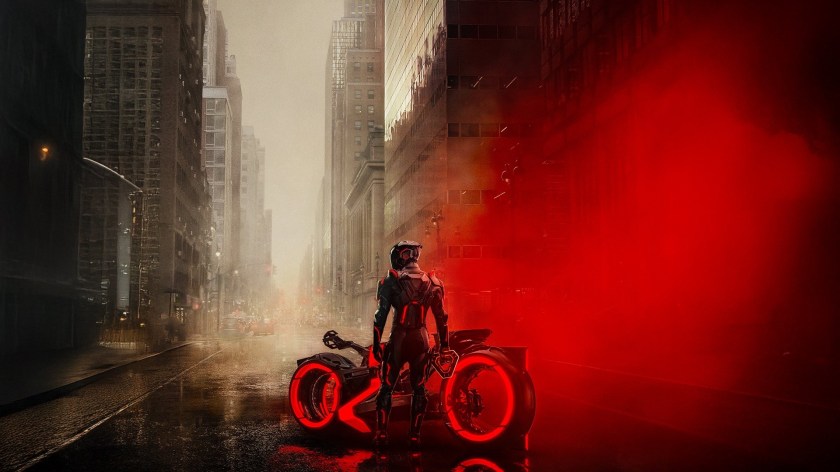
Along with an intriguing story, the most engaging elements of the film are the visuals and score. These are the main things this series is known for, and Ares gives us the goods. This is easily the most impressive film in director Joachim Rønning’s catalog, as he excels in making everything look so incredibly wicked. A chase scene with the Tron Cycles in a busy downtown shows off how cool this concept can be.
NIN’s (Nine Inch Nails) score works well, elevating the visuals and narrative. It is not easy to find musicians who can rival Daft Punk, who planted their flag near the top of the mountain of movie scores with Legacy. NIN was a perfect choice, able to balance pure awesome-punk-edginess with emotional satisfaction.
With all these positives, it begs the question: This is suffering the same box office fate as other Tron movies, why? What is it about Tron that turns moviegoers away? The coverage before this movie’s release asked the same thing. Ares tells a story worth seeing on the biggest screen possible due to its attention to visual detail, creative use of music, and a main character whose development keeps your interest.
Modern audiences pay to see movies with places and characters that remind them of other movies they already like. Tron: Ares seems perfect on paper for this criteria, but in practice, it feels unique and willing to have its own voice. In years to come, when I’m asked why I liked this over other critically acclaimed films in 2025, I’ll mirror Ares’ response on Depeche Mode: it’s just a “feeling.”
My Grade for Tron Ares is an A-
 MooCow Entertainment