For me, the most essential aspect of a timeless and memorable story is its characters. I have come to believe that without good characters, it doesn’t matter if we are told of ancient cities lost in uncharted jungles, or evil empires that need to be toppled over; we won’t care unless we have characters with whom we can sympathise or relate. There is a list of great characters in all forms of entertainment that have stuck with their respective audience permanently. In movies, on that list, we find Indiana Jones, Luke Skywalker, George Bailey, and, of course, Blaster of G-Force fame. In literature, figures such as Atticus Finch and Odysseus are notable examples.
With video games, this idea becomes a little more complex. Millions know the likes of Mario and Sonic the Hedgehog, but as fun as their respective games might be, we didn’t play Super Mario Bros in the ’80s, or today, because we can all relate to jumping on turtles. Well, most of us can’t anyway. In the modern gaming landscape, we can find some characters whose stories do hold depth, such as Master Chief or Nathan Drake. But, will these characters be remembered in even 50 years? To some, but perhaps not your average consumer, the masses playing these games.
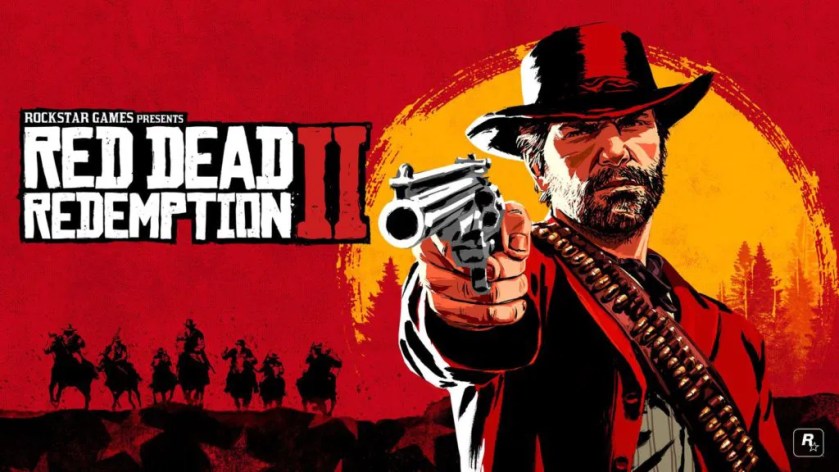
On the surface, Red Dead Redemption II (a prequel to the first game) is your run-of-the-mill open-world game with the skin of the American cowboy era thrown on top. After playing the nearly 70-hour campaign twice now, I firmly believe that the ultimate video game character is this game’s lead protagonist, Arthur Morgan.
OUTLAWS FROM THE WEST:
Arthur Morgan is a bad man.
At the beginning of the story, he robs train cars, has bar fights with people that piss him off, and threatens those to whom the gang has loaned money, and he enjoys doing these things. To him, this is the only way to live. He has been influenced by the leader of the gang, Dutch Van Der Linde, who has only shown Arthur this view of the world. We learn of a heist gone wrong that happened just before the events of this game, and now the gang is on the run from the Pinkertons, a group of bounty hunters.
With that framework, set in fictitious 1899 America, Red Dead Redemption II consists of Arthur realising that the new world is closing in on the promise of Manifest Destiny and the gang’s way of life. In other words, the ‘Cowboy’ is coming to an end. They keep committing bigger and bigger crimes under the guidance and trust of Dutch, who, in his words, “has a plan.” At this point, no one has any reason to be unloyal or doubt his leadership. Because of their actions, they must keep moving, just long enough until they have enough money to get away and be free. They are like moles to worms, only that they are blind. Though they don’t know it yet, there are no worms.
During a conversation between him and Dutch, Dutch says, “I was gonna say you’re like a son to me… but you’re more than that.” Arthur’s reaction is of pure satisfaction, this is a man who has been his mentor for years and to hear this be said out loud makes his development even more powerful. Dutch’s plan is not working. Members of the gang are dying, they are still on the run. This is something Arthur is in denial of.
Anything the gang needs, Arthur will do. He truly believes in the cause. At one point, early, even saying, “You know, nothing means more to me than this gang. The bond we share, it’s the most real thing to me.” After yet another heist goes bad, two of his closest friends in the gang are killed, Hoesa and Lenny. Arthur and Hoesa share a particularly close bond, as he was in many ways even more of a father figure than Dutch and was Dutch’s second in command. Lenny was a lost soul who found purpose with this group. During an interaction with the three of them in the main camp, Hoesa tells Lenny, “We got out of worse situations than this. Done plenty of bad things that we’ve all forgotten about. Don’t take Dutch’s patter about redemption too seriously. We’re doomed just like every other creature on this rock.”
After the death of these friends, Arthur slowly begins to see things through his own eyes rather than the forced lens of his mentor. Through subtext, we can infer that Dutch himself is in denial of his own plan, and Hoesa’s death takes a large toll on him as well. Arthur is doing everything that he can to tell himself that this plan will work, though he never truly accepts it won’t until it is too late. Was it too late? What sets him on his personal Manifest Destiny is that under Dutch’s reign, he realises the gang is no longer his home. Was it at one point? Long before this story took place, perhaps.
Early in the game, while collecting a debt (beating the man who owes you money), Arthur gets coughed on. A small ‘blink and you’ll miss it moment.’ You discover that due to this, he has contracted tuberculosis. Just as he is beginning to change, he is told his fate is an early grave. This hits him like one of the freight trains he used to rob, as, in a way, he was already dead. Every moment spent devoted to Dutch had been a soulless endeavour. Ironic as it was, it was clearly the only part of his life he felt comfortable pouring his heart and soul into.
There was one who could have changed that. In a side quest, you help Mary, Arthur’s ex-fiancée. Mary and Arthur could have been, but he was too reckless for her father’s approval. She strings him along, asking for your help with her brother, then her father. In one of the last missions with her, if you decide not to help her, Arthur says, “…just like you couldn’t marry me and I couldn’t change and so on, and so forth. I just cannot.” Neither of them could fully compromise for the other, and for that, Arthur was destined to stay with the gang rather than the life he deserved. Even when she offers to run away with him, his loyalty to the idea of the gang, to try and save them from Dutch’s grasp, is something he cannot shake.
His understanding of loyalty shifts as the story progresses. One man in the gang, John, has a family, and Arthur urges him to leave. John asks, “What about Loyalty?” To which Arthur replies, “Be loyal to what matters.” This thing that matters to Arthur is no longer what Dutch thinks is best for the gang as a whole, but what is best for each member of the gang as an individual.
Arthur is a character who, no matter how much good he does or how many people he saves, tells himself he’s not doing enough. He is us. One of the most powerful scenes in the game, and in my personal opinion one of the best in modern storytelling, comes in the form of a conversation he has with a catholic sister at a train station. Who he helped earlier in the story. This is going to be a bit of a quote dump, but it is important for context.
He tells her he’s dying and says, “I’ve lived a bad life, sister.” he follows that by adding, “I had a son. He passed away. I had a girl who loved me, I threw that away. My momma died when I was a kid, and my daddy, well, I watched him die. And it weren’t soon enough.” She responds, “…life is full of pain. But it is also full of love and beauty.” He questions what he should do and what direction he should take given his diagnosis. She tells him that he should be grateful he has finally been given a chance to see his life with a new perspective. Ending with “Take a gamble that love exists and do a loving act.”
This scene has such a profound meaning to his character development. What is essentially happening is that a cowboy is coming to terms with his own mortality, wondering his place in the world and universe. The dialogue between these two is some of the most beautiful in all of fictional writing, to me.
It is time for Arthur to confront Dutch, and in this process, he discovers that one of the gang members, Micah, has been feeding information to the Pinkertons for some time now. Dutch does not believe Arthur, as he can not confront the reality that he has failed as a leader, and his master plan has failed. In his last moments, Arthur saves John, he fights Micah, and his dying words as Dutch stands over him are, “I gave all I had. I did.”
Arthur’s character development makes what could otherwise have been a forgotten story perfect. He will be remembered as one of the greats in the video game medium, proving that it is an art form. Arthur had been living for nothing, a “false prophet” so to speak, for most of his life, but he died for something greater. He did what was best for the gang, his family, which was what he always tried to do.
Was there too much wrong in his past to truly change? He might believe that, but it is simply not true. Arthur’s story resonates with me because it’s a story about us. We’re all cowboys on the run from an ever-changing world. His story teaches us that if it’s sincere, it’s never too late to change. Not adapt, but improve. That there is power in doing good.
Arthur Morgan was a good man.
 MooCow Entertainment